The Threats & Challenges South African CEOs will face in 2019
A comprehensive report on the 5 big threats South African CEOs can see but can't control.
And the one consequence that no one foresaw.
Quite a few reports have been released in the last couple of months detailing the worries of business leaders all over the world, including South Africa. When you put it all together, there are some interesting things to take away from it.
There are a lot of good things about the South African economy, but unfortunately, it’s not all sunshine and rainbows. In fact, if you look at what business leaders see as threats, there’s a lot of agreement on what the biggest threats are to businesses in South Africa.
Here’s what’s interesting: the 5 biggest threats also threaten people, not just businesses.
And that seems to be source of one consequence that no one really predicted and suddenly spiked in 2018.
Introduction
As a business leader, there are two kinds of problems: The ones you can control and the ones you can’t. Unfortunately, many of the problems you can’t control can have a significant impact on your business and its workings.
This isn’t different in South Africa. In fact, according to a number of reports from Allianz, PwC, and others, South Africa stands out in a couple of ways.
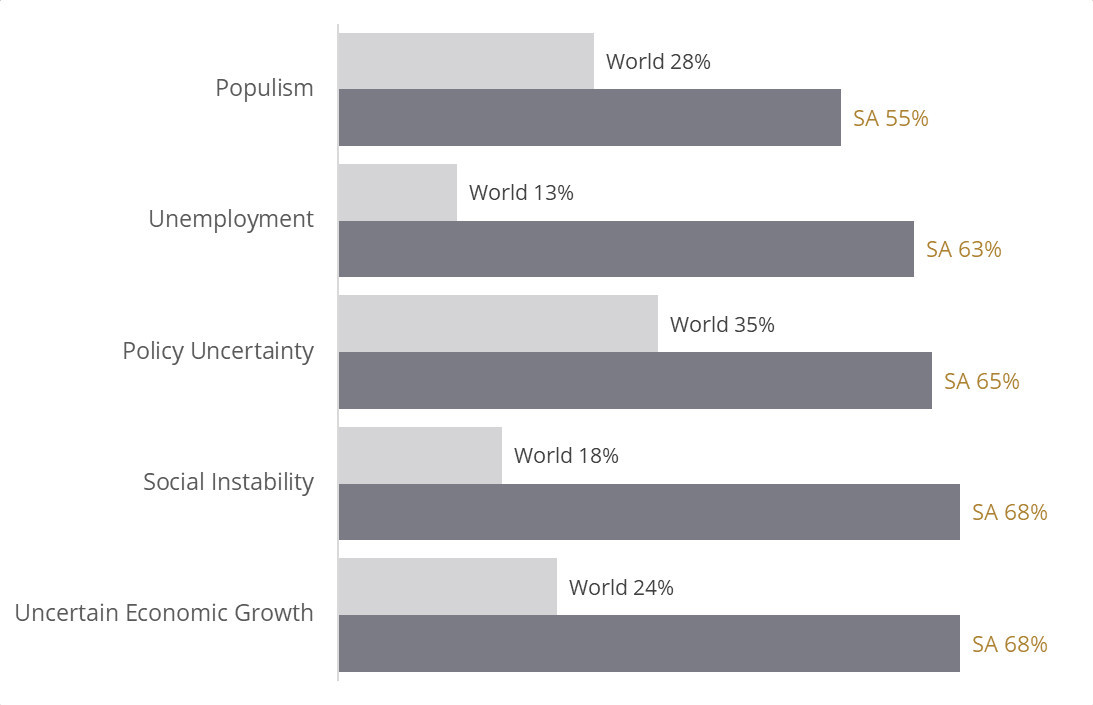
When CEOs were asked how concerned they were regarding specific economic, policy, social, environmental, and business related threats, the responses were markedly different from the global averages.
South Africa Stands Out
These are threats with potential deep-rooted consequences to the country, and they threaten the very existence of companies in South Africa.
Skills Gap - The South African Brain Drain
One problem that always seems to loom in the background is the lack of qualified personnel to ensure companies can keep innovating and grow their market presence. This is a problem all around the world, where it seems companies are still having trouble finding talent, consistently ranking third.
Unfortunately, this is a problem in South Africa as well. Only, in South Africa the problem is compounded by a variety of factors, one of which is the continuous emigration of skilled workers out of the country.
Ironically, it is those first five threats that are also contributing to the brain drain.
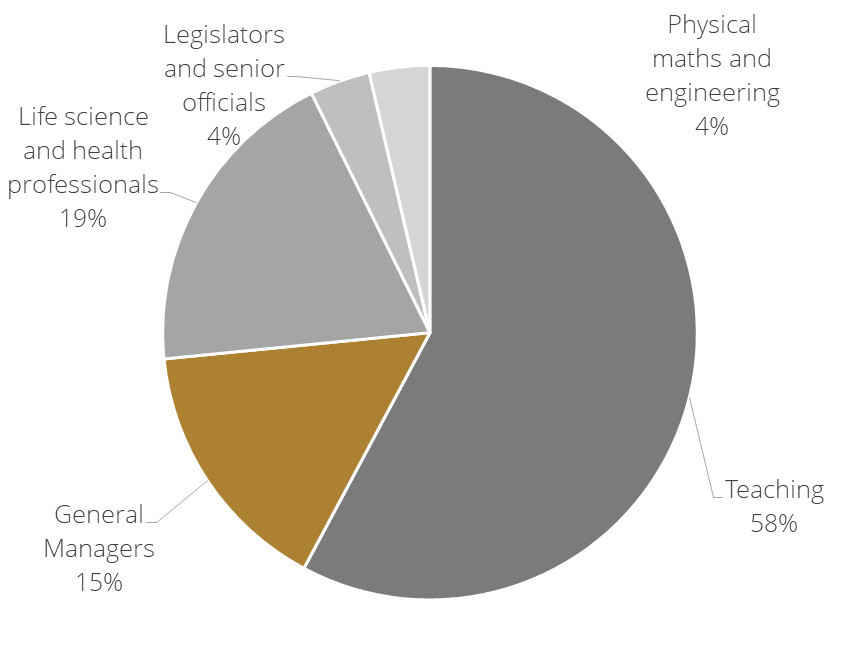
What stands out when we're looking at the demographics, we see that while the people that are leaving are diverse, a significant amount are managers. This is a key statistic as data shows that more and more people with money are looking outside of South Africa to make their next move.
The driving forces behind this range from financial reasons to safety concerns. These seem to be universal although high net worth individuals have the most possibilities in terms of international movement.
The impact of the 5 Threats
The 3 Drivers for the Brain Drain
Personal & Family Safety
Business Opportunity
Better Opportunities for Family
Everyone wants the best for their family and having to be concerned about their safety (or your own for that matter) is not what you want. Hence, if you can do something about it, you would. And most high net-worth individuals feel the same way.
From government corruption to simply "being where the money is", or even just moving for a better job. There's motivation to spare to look to other countries in terms of opportunity.
Once you're able to emigrate, there are quite a few added bonuses that become yours and your family's to benefit from. One of the driving forces here is the chance for a better education for children, often at a lower cost than you would've had to pay otherwise for the same quality.
This "brain-drain" could potentially have a lasting impact on South Africa's ability to tackle future complex problems.
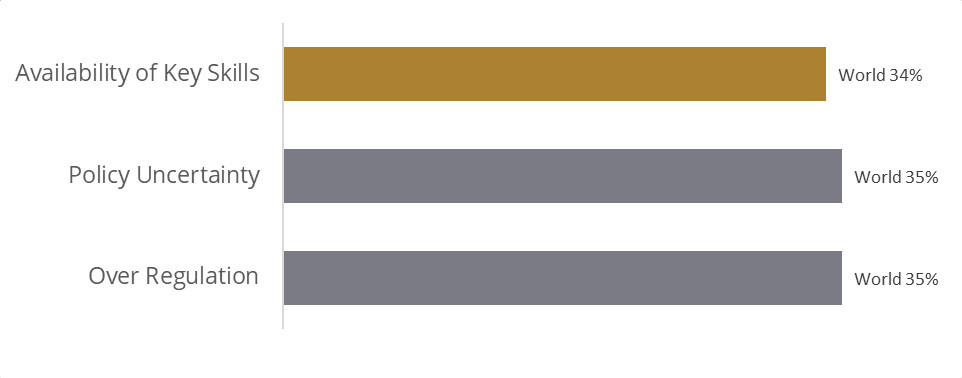
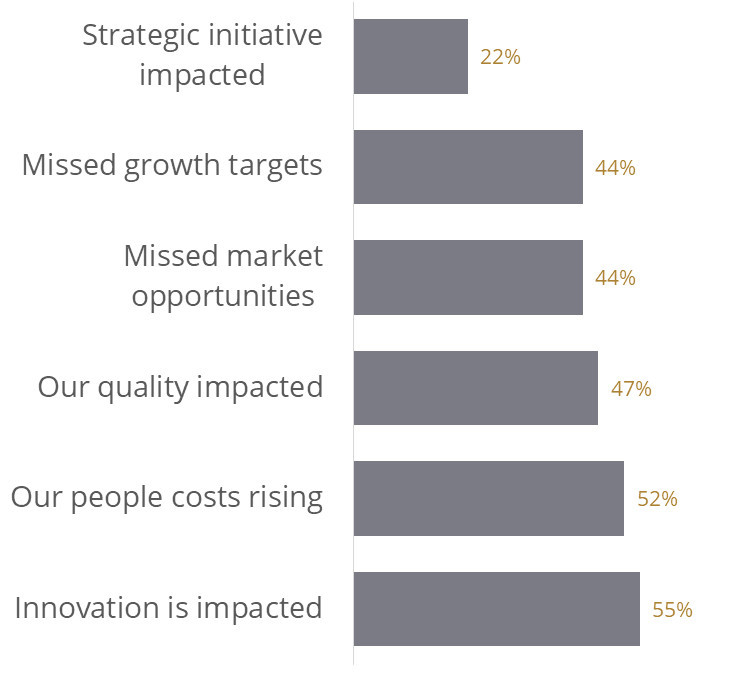
In fact, on a global scale, the current skill gap already has a significant impact on how businesses are able to achieve their goals, as can be seen below.
Businesses Are Starting to Feel it
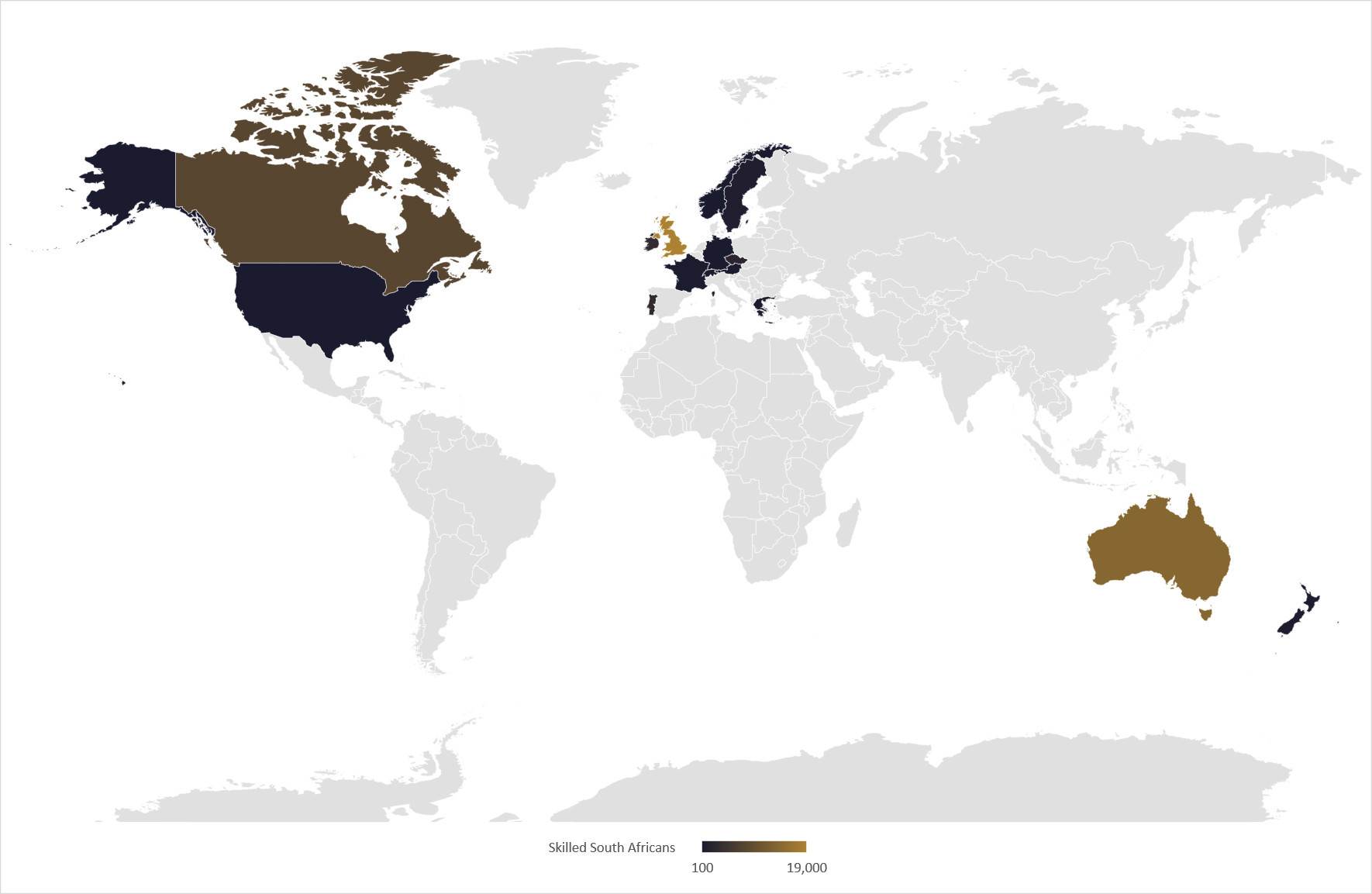
Where Is Everyone Going?
Skilled South Africans are moving all over the world, but most of them move to countries like the United Kingdom or Australia.
High-net-worth individuals are able to make the move by investing in opportunities that are meticulously chosen to include certain perks. These "perk investments" often include benefits like becoming a citizen of a different country or visa-free travel in many countries.
The Shocking Statistic: 86% of SA executives would move abroad, given the opportunity
With the latest Jack Hammer Executive report comes a terrible realization: Given the chance, 86% of South Africa's top executives would seriously consider moving abroad.
As a consequence, this also means that South Africa's most wealthy citizens are leaving the country for greener postures.
Why the wealthy? Well, most countries have strict requirements for being let in, be it temporary or permanent. For high-net-worth individuals, it's a bit different.
Not only do many of them not require a job, a lot of them primarily "emigrate" to a different country with flexibility in mind. For many of them, not needing a visa for most of their travels is reason enough to make the move.
"The Wealthy Are Leaving because of Socio-Economic-Political Reasons"
RELATED
Do The Test: Are Perk Investments within your reach?
There are plenty of benefits, like being able to travel through or do business in Europe without the need for a visa.
Unfortunately, perk Investments are not available to anyone. Do the test and find out if you're one of the lucky few.
Take the test now
Office 404, Building B, Al Saaha Offices, Souk Al Bahar
Old Town Island, Burj Khalifa District, Dubai – UAE
Next Generation Equity
Phone
+971 4 457 8260
enquiry@nge.ae
www.nge.ae